
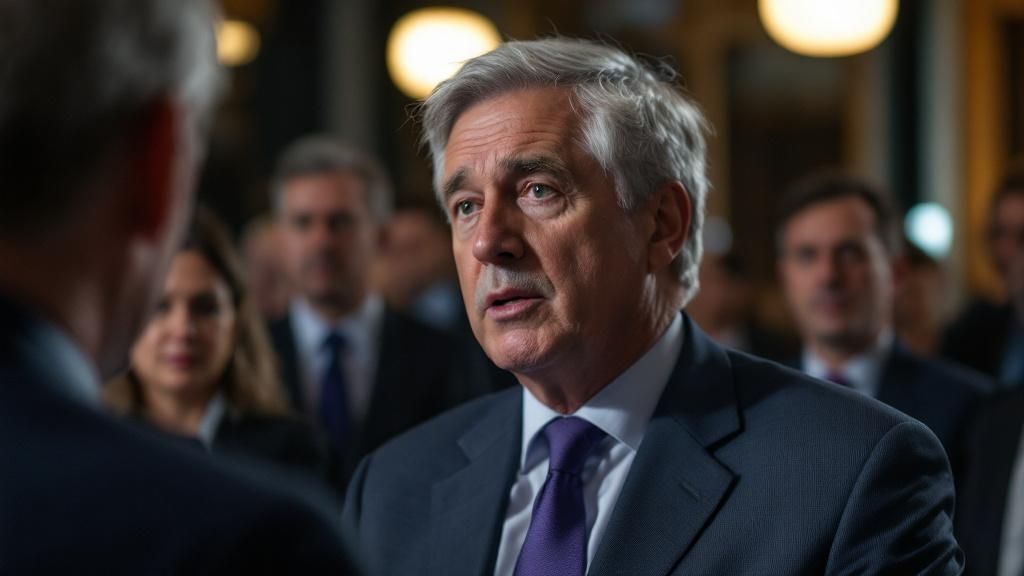
As families across the nation grapple with rising energy bills and inflation reaching unprecedented levels, the opposition figurehead has initiated a scathing attack on the Government’s management to the cost-of-living emergency. In a fraught Commons clash, the opposition has challenged the government’s limited assistance schemes, calling for more meaningful support to help hard-pressed families. This article explores the mounting divisions surrounding the crisis and explores the rival proposals for financial support.
The Opposition party’s Assessment of State Policy
The leader of the opposition has stepped up examination of the government’s handling of the worsening affordability crisis, asserting that present interventions prove inadequate in addressing the level of hardship impacting British families. During parliamentary exchanges, the opposition has presented a detailed critique covering limited financial aid, inadequate action in the energy sector, and a apparent shortage of commitment to combating inflation. The opposition argues that whilst families struggle with record-high bills, the government’s ad-hoc approach simply treats symptoms rather than tackling underlying causes of financial hardship.
Central to the opposition’s case is the contention that the government has fundamentally misjudged both the extent and timeframe of the crisis. Opposition representatives have underscored figures suggesting that millions of households now experience real hardship, with many compelled to decide between keeping warm and feeding themselves. The opposition contends that the government’s initial response did not fully gauge the crisis’s consequences, producing assistance programmes that were found wanting when circumstances deteriorated further. This miscalculation, they argue, reveals broader failures in economic forecasting and preparedness.
Insufficient Assistance Provisions
The opposition has consistently challenged state assistance programmes as inadequate and misdirected, contending that price regulation frameworks fall short of protecting those on lower incomes sufficiently. Commentators highlight that whilst the government has introduced multiple support measures, such as grants and council tax rebates, these initiatives deliver limited reprieve without tackling systemic issues. The opposition maintains that income-assessed support remain excessively narrow, leaving out millions of employed households who yet struggle with rising costs. Moreover, they argue the government’s approach falls short of the ambition necessary to confront such an unparalleled economic difficulty.
Opposition analysis indicates that existing assistance programmes disproportionately disadvantage middle-income households who sit outside qualifying criteria for targeted assistance. The party has outlined different approaches centred on universal payments, broadened support schemes, and direct government intervention in fuel sectors to control costs. They emphasise that temporary measures, albeit positive, cannot substitute for fundamental systemic change. The opposition argues that in the absence of significant law changes and greater state spending, households will continue experiencing acute financial strain for years to come.
Extended Economic Policy Challenges
Beyond urgent crisis response, the opposition has posed key questions regarding the government’s long-term economic strategy and competitive position. Opposition analysts argue that the present method emphasises short-term political considerations over sustainable economic planning, possibly undermining Britain’s long-term prosperity. They contend that without deliberate investment in renewable energy infrastructure, productive capacity, and human capital development, the nation risks prolonged economic stagnation. The opposition underscores that managing cost of living difficulties requires comprehensive reforms addressing output efficiency, technological innovation, and economic sector development alongside urgent relief measures.
The opposition has outlined concerns that government policy lacks consistency across different economic domains, with energy policy, industrial strategy, and fiscal measures operating in isolation rather than as integrated components. Critics argue this disjointed strategy prevents effective addressing of persistent inflation and fundamental economic problems. The opposition calls for a coordinated national strategy covering energy transition, manufacturing revival, and skills development. They maintain that genuine crisis resolution demands transformative policy reform rather than incremental adjustments to existing frameworks.
Government’s Defence and Counterarguments
The government has steadfastly defended its economic policy, arguing that the cost of living pressures are primarily driven by global factors beyond Westminster’s direct control. Ministers have highlighted the unprecedented nature of the energy crisis, resulting from international tensions and global supply chain breakdowns. They argue that their targeted support packages, encompassing the price cap on energy and affordability support payments, embody a measured and fiscally responsible approach. The Finance Ministry maintains that excessive spending could exacerbate inflation even more, damaging long-term financial stability and ultimately harming the very households the opposition purports to support.
Government representatives have emphasised the significant monetary support currently in place, totalling billions of pounds in direct support to vulnerable households. They argue that their measures reconcile immediate relief with disciplined budgeting, avoiding the debt spiral that uncontrolled expenditure could trigger. Ministers also point to their initiatives in boosting energy security through sustainable energy projects and supply diversification. The government argues that whilst the opposition provides sympathetic rhetoric, their suggested policies lack economic credibility and would become unaffordable without increasing taxation or additional debt.
Furthermore, government officials stress their resolve to confronting underlying economic challenges through productivity improvements and enterprise investment schemes. They contend that sustainable recovery necessitates structural economic reforms rather than short-term payments. The administration holds this approach in the end produces increased wealth and stability for the entire population.
